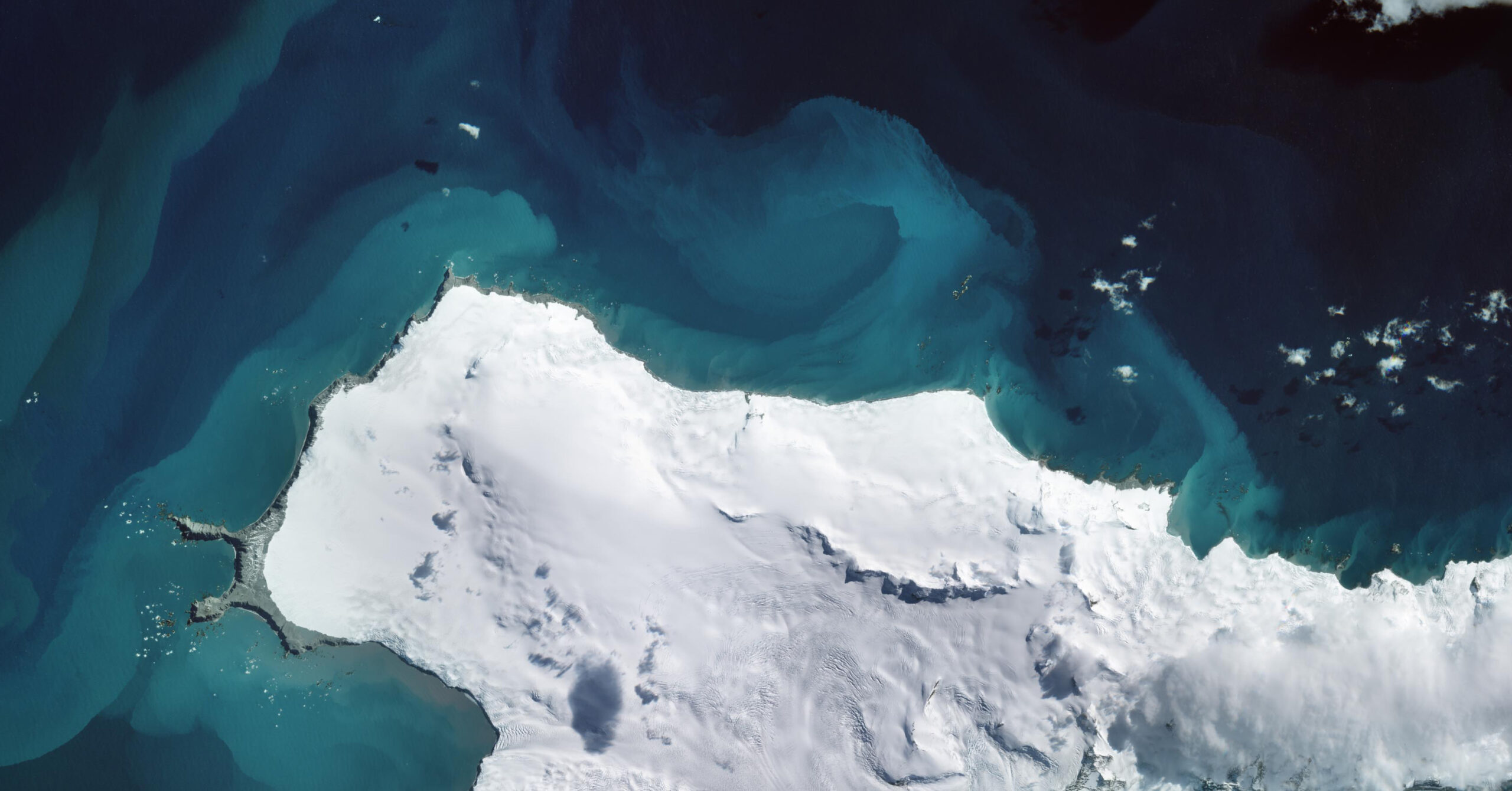
Freshwater released from Antarctica plays a crucial role in the Earth system. It enters the Southern Ocean through ice discharge across grounding lines, melting beneath floating ice shelves, iceberg calving and surface meltwater runoff. These freshwater fluxes contribute to sea-level rise, influence the formation of Antarctic Bottom Water, and help regulate ocean circulation patterns that connect Antarctica to the global climate system. Yet many of the processes involved remain poorly quantified because they occur beneath ice shelves, across vast remote regions, and vary strongly in space and time.
This alliance brought together the European Commission-funded projects OCEAN:ICE and SO-CHIC with ESA’s Polar+ Ice Shelves and SO-ICE projects to better understand how freshwater released from Antarctica affects the Southern Ocean and the global climate system.
Polar+ Ice Shelves provided satellite-based measurements of ice-shelf mass change, grounding-line discharge, calving and ice-shelf melt, while OCEAN:ICE and SO-CHIC investigated interactions between Antarctic ice, freshwater and ocean circulation. Building on earlier research and collaboration in the alliance, ESA provided additional funding through SO-ICE, strengthening cooperation between the glaciology and oceanography community to investigate how the observed Antarctic freshwater modifies ocean circulation, water-mass formation, heat transport and climate processes.
Together, the projects bridge a critical scientific gap: from measuring freshwater inputs at their source to understanding their consequences throughout the Southern Ocean.
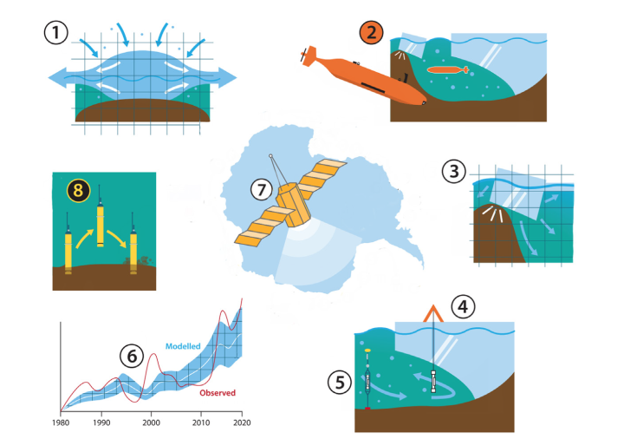
A major alliance outcome highlighted that Antarctica has experienced an average net ice-sheet loss of approximately 109 ± 56 Gt per year over the past three decades, while new Earth observation products now provide continent-wide estimates of grounding-line discharge, ice-shelf basal melt and calving fluxes at monthly to annual timescales. The work also identified key uncertainties in surface meltwater runoff, grounding-line locations, basal melt rates and ice thickness, helping define priorities for future monitoring and model development.
A second alliance result delivered the most comprehensive compilation to date of Southern Ocean mooring observations, bringing together 521 mooring time series from 470 sites, some extending back to the 1970s. The resulting dataset provides unprecedented information on the variability of water masses around Antarctica. Combined with satellite observations of ice-sheet and ice-shelf change it also enabled the creation of a new Southern Ocean full-depth climatology, improving the representation of Antarctic shelf seas, dense water formation and ocean-ice interactions.