Why terrestrial carbon science matters
The terrestrial carbon cycle governs exchanges of carbon between the atmosphere, vegetation and soils. Forests, agricultural land, wetlands and other ecosystems can remove carbon from the atmosphere or release it in response to factors including land management, climate change, fires, CO2 fertilisation and atmospheric deposition. The EU’s land carbon sink has declined over the last decade, challenging progress towards its 2030 land-removal target.
Strengthening Europe’s observation and modelling capacity can help connect global carbon assessments with the regional and national evidence needed for climate policy and land management, including national GHG inventories. Carbon science also connects climate, water, biodiversity and food systems: changes in ecosystem productivity, biomass and soil carbon affect both the climate system and the services on which society depends.
Understanding where carbon is stored and released, why sinks change and whether they will persist is needed to assess carbon budgets. Improved knowledge supports the Global Carbon Budget, IPCC assessments and thus contributes to the evidence base for implementing international instruments such as the Paris Agreement, and European policies such as the European Climate Law, LULUCF Regulation and the Carbon Removals and Carbon Farming Framework.
Key challenges
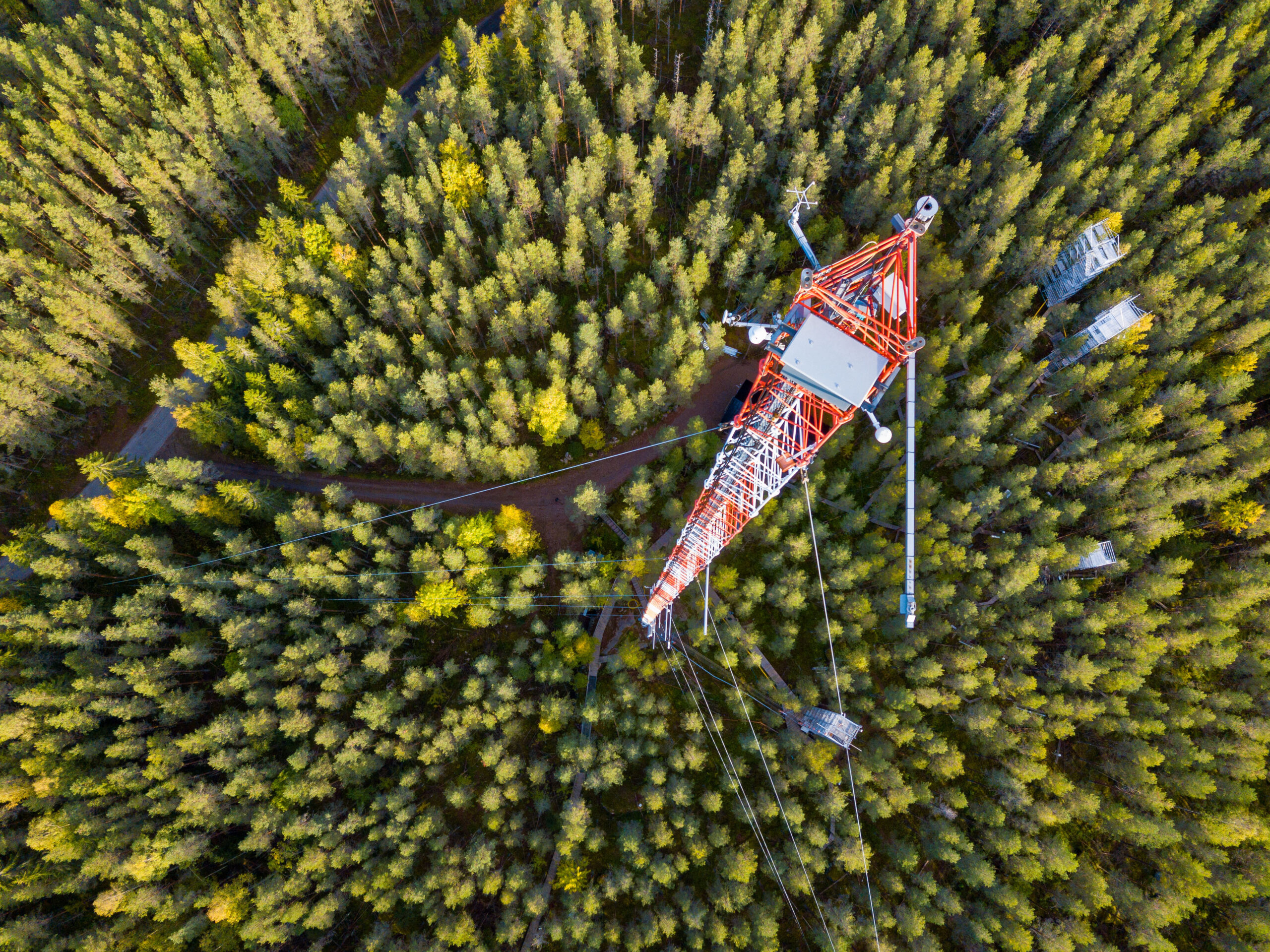
A central challenge is reconciling bottom-up and top-down assessments of the carbon cycle. Inventories, flux towers, Earth observation and ecosystem models estimate carbon stocks and processes from the surface, while atmospheric measurements and inversions constrain net fluxes from the atmosphere. Different methods and scales across different regions give different results, and combining these data, including new, independent estimates (e.g. inverse modelling based on EO) increase our ability to understand and locate and attribute carbon sources and sinks and their change over time.
Priorities are to develop integrated carbon observing and modelling systems, reconcile regional-to-global carbon budgets and better attribute changes in sources and sinks. Key gaps include climate extremes, fires and other disturbances, land management, ecosystem recovery and their effects on future sink capacity.
There is a growing need to improve the timeliness and coordination of carbon budget assessments, enhance data interoperability, reusability, and reproducibility. EO offers a unique opportunity to dynamically reconstruct the carbon cycle at unprecedented scales. With new observations becoming available from missions such as Copernicus Sentinel missions, BIOMASS and FLEX, the scientific community is now well-positioned to advance integrated carbon monitoring systems and improve understanding of the terrestrial carbon cycle.
These priorities build on the scientific recommendations of the Carbon from Space Workshops and findings from the RECCAP studies by the Global Carbon Project .
ESA-EC contribution
The EC–ESA Flagship connects Earth observation, flux-tower measurements and carbon-cycle modelling through EC-supported research and the ESA Carbon Science Cluster. It provides a framework to address carbon-cycle questions that require observations, models and expertise across individual projects and observing systems.
European capabilities provide complementary views of the carbon cycle: the EO missions Biomass, providing observations of forest structure and biomass; FLEX which measures vegetation fluorescence linked to photosynthetic activity; and the Copernicus series provides land and atmospheric observations while the ICOS series of flux towers measure ecosystem carbon exchange and atmospheric greenhouse gas exchange.
The Flagship aims to bring these independent lines of evidence together with inventories, models and data assimilation to reconcile carbon stocks and fluxes across scales, from ecosystems and countries to regional and global carbon budgets. Cooperation with RECCAP and the Global Carbon Project connects European carbon science to international carbon-cycle assessment.