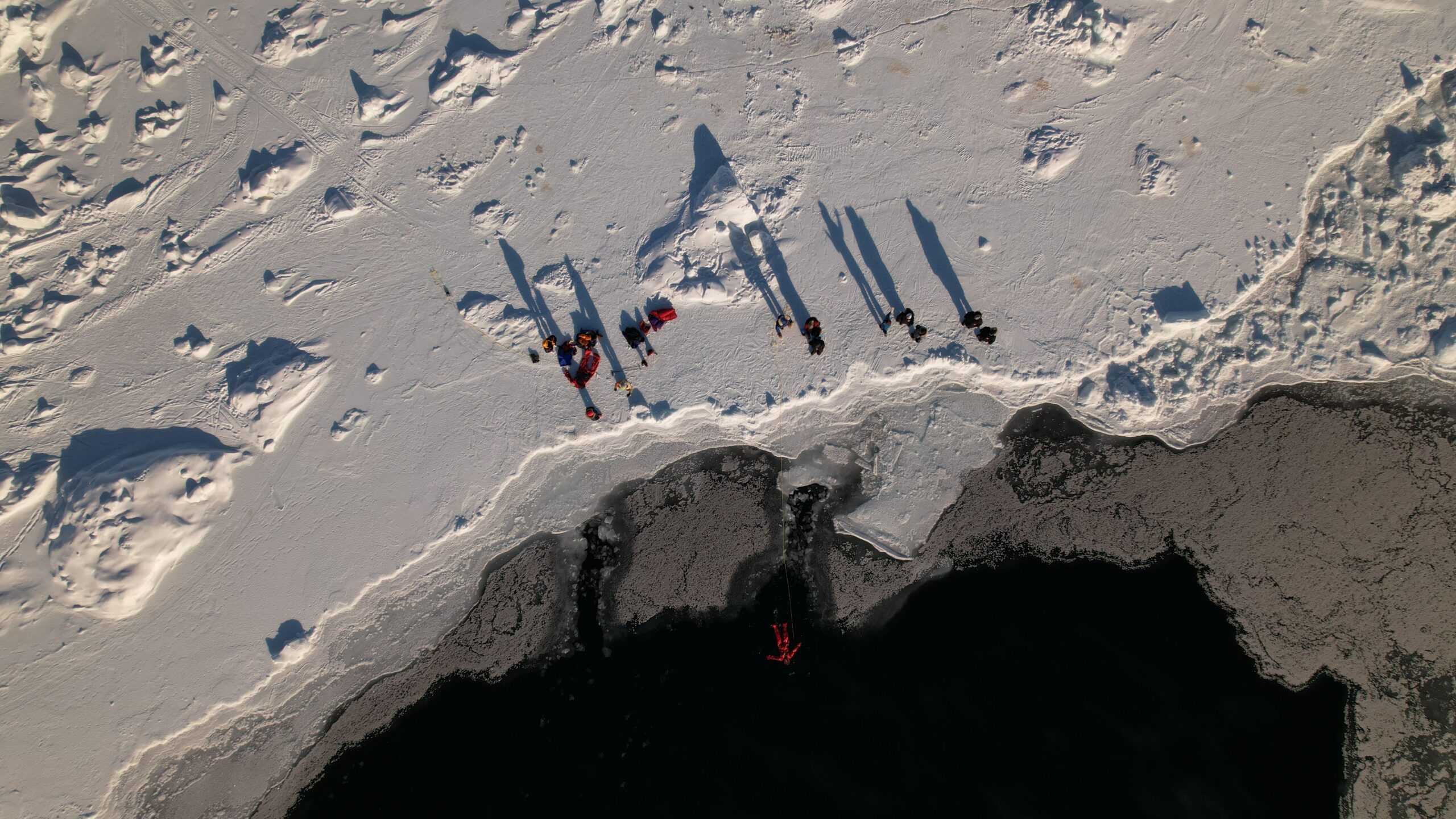
Arctic coastlines are among the most rapidly changing environments on Earth. As permafrost thaws, coastlines become increasingly vulnerable to erosion, releasing previously frozen carbon, threatening infrastructure and affecting the communities and ecosystems that depend on them. Because most human activity in the Arctic takes place along these coasts, understanding how they respond to climate change has become a critical scientific and societal challenge. The rapid evolution of Arctic coastal systems also has implications far beyond the region, influencing biodiversity, greenhouse gas emissions and the global climate system.
This alliance brought together the Horizon 2020 Nunataryuk project and ESA’s EO4PAC (Earth Observation for Permafrost-dominated Arctic Coasts) project through complementary approaches. Nunataryuk investigated the impacts of thawing permafrost on coastal erosion, carbon release, infrastructure vulnerability and community resilience, while EO4PAC developed Earth observation methods and geospatial products for monitoring coastal change across the Arctic.
The collaboration delivered concrete results by combining EO4PAC and Nunataryuk datasets with other observations to extend coastal assessment from individual research sites to a consistent pan-Arctic scale. A resulting study assessed coastline change, permafrost conditions and sea-level-rise exposure around 318 Arctic coastal settlements. It found that erosion affected 70% of the investigated coastline, while by 2100, 45% of coastal settlements could be affected by sea-level rise and 21% by coastal erosion. The associated datasets, including the Sentinel-1/2-derived Arctic Coastal Human Impact dataset (SACHI), provide the basis for assessing coastal vulnerability and supporting adaptation planning.

The collaboration also strengthened the link between observed coastal change and the wider Arctic carbon cycle. A synthesis work shows that increasing coastal erosion and enhanced nearshore carbon turnover are expected to contribute to a weakening of the Arctic carbon sink under continued warming, highlighting the importance of sustained observations of land-ocean carbon exchanges.

This coordinated approach created significant added value for both projects and the wider Arctic research community:
- For EO4PAC, Nunataryuk’s field observations, scientific expertise and Arctic case studies provided a strong foundation for developing and validating Earth Observation approaches across diverse Arctic coastal environments.
- For Nunataryuk, EO4PAC’s pan-Arctic coastal erosion and infrastructure datasets extended the project’s ability to assess coastal vulnerability, carbon release and climate feedbacks beyond individual study sites.
- For Arctic communities, the alliance improved understanding of coastal risks affecting settlements, infrastructure and livelihoods, supporting more informed adaptation planning in rapidly changing environments.
- For the scientific community, the collaboration strengthened and expanded the Arctic Coastal Dynamics Database, bringing together remote sensing, field observations, modelling and Indigenous knowledge into a shared framework for Arctic coastal research.
Moreover, building also on the results from this alliance, the Horizon Europe project ILLUQ is quantifying lateral fluxes of legacy contaminants and emerging chemicals from permafrost coastal erosion.