Understanding biodiversity and vulnerable ecosystems
Biodiversity sustains ecosystem functioning and resilience and the services on which societies depend, from food production and pollination to water regulation and carbon storage. In the EU, 81% of protected habitats are in poor status and one in three bee and butterfly species is declining. Terrestrial, freshwater, marine and agricultural ecosystems face interacting pressures from climate and land- and sea-use change, pollution, exploitation, invasive species, pests and diseases.
Understanding how ecosystems and natures contribution to people, respond to direct and indirect pressures, ecosystem resilience and evolution is critical for conservation, restoration and sustainable management. This knowledge supports the EU Biodiversity Strategy for 2030, Nature Restoration Regulation, Birds and Habitats Directives and Kunming–Montreal Global Biodiversity Framework. The Nature Restoration Regulation sets an EU objective for restoration measures covering at least 20% of land and sea by 2030. At global level, the Kunming–Montreal Framework establishes 23 targets for 2030, supported by a common monitoring framework for assessing progress.
Key challenges
EC and ESA jointly aim to progress knowledge towards these four key challenges:
- Understanding ecosystem functioning, integrity and resilience across preserved and managed ecosystems, including indirect pressures affecting biodiversity and the ecosystem services underpinning fisheries and agriculture, supporting the EU Biodiversity Strategy for 2030 and the Vision for Agriculture and Food.
- Contribute to develop the next generation of “fit for purpose” biodiversity observation systems from genomes to space, supporting international efforts such as GBIF, GOOS, OBIS or GEO BON and leveraging satellite earth observation such as BIOMASS, NISAR, GEDI, FLEX, EnMAP, or PRISMA.
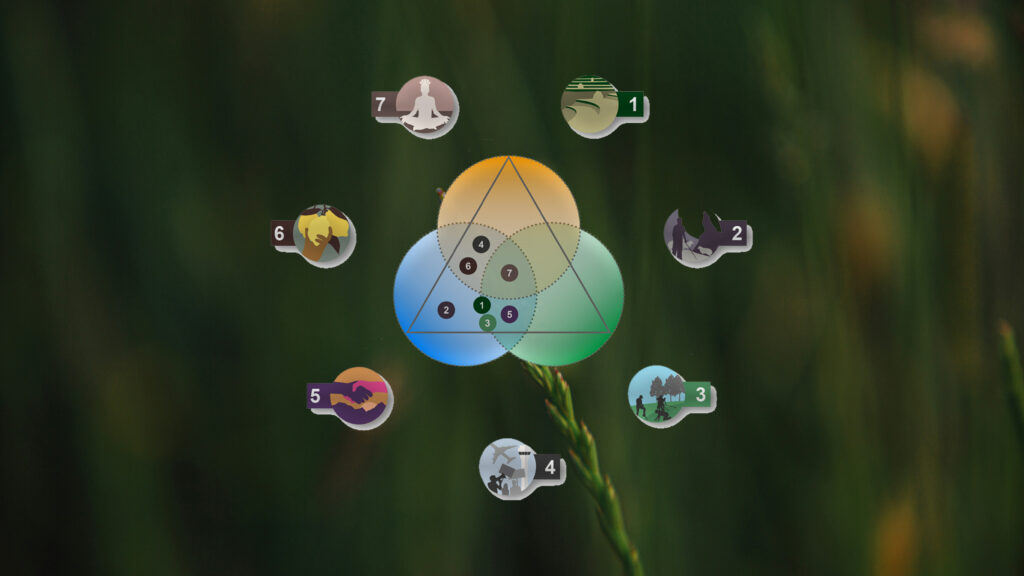
- Predicting ecosystem trajectories and nature-positive pathways, advancing biodiversity scenarios and models aligned with the IPBES Nature Futures Framework to explore desirable futures for nature and pathways towards them.
- Improving conservation and restoration across terrestrial, freshwater and marine ecosystems, strengthening science for nature-based solutions and supporting the EU Nature Restoration Regulation and European Ocean Pact.
ESA-EC contribution
The EC-ESA Flagship jointly explores the potential of EO capabilities to better characterize and understand anthropogenic pressures on biodiversity and vulnerable ecosystems and its connection with ecosystem stability within safe planetary boundaries.
ESA and the European Commission jointly organised BIOSPACE25 in 2025, the first international conference dedicated exclusively to the application of satellite remote sensing across terrestrial, freshwater, coastal and marine biodiversity. Organised with DG RTD, JRC and international partners, it strengthened collaboration across the EO, ecology, monitoring and policy communities and gathered strategic recommendations to help shape future ESA–EC activities on biodiversity and nature conservation.
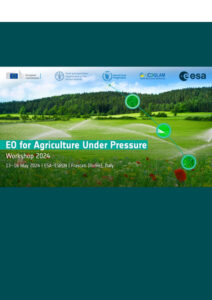
Cooperation is expanding with GEO BON, Biodiversa+, EBOCC and the EC Knowledge Centre for Biodiversity, connecting European and global biodiversity efforts. Through the ESA Agriculture Science Cluster, collaboration also addresses crop stress, pests and diseases, in-situ data and resilient food production, including through EO4Agri and the Alliance on Crop Health.