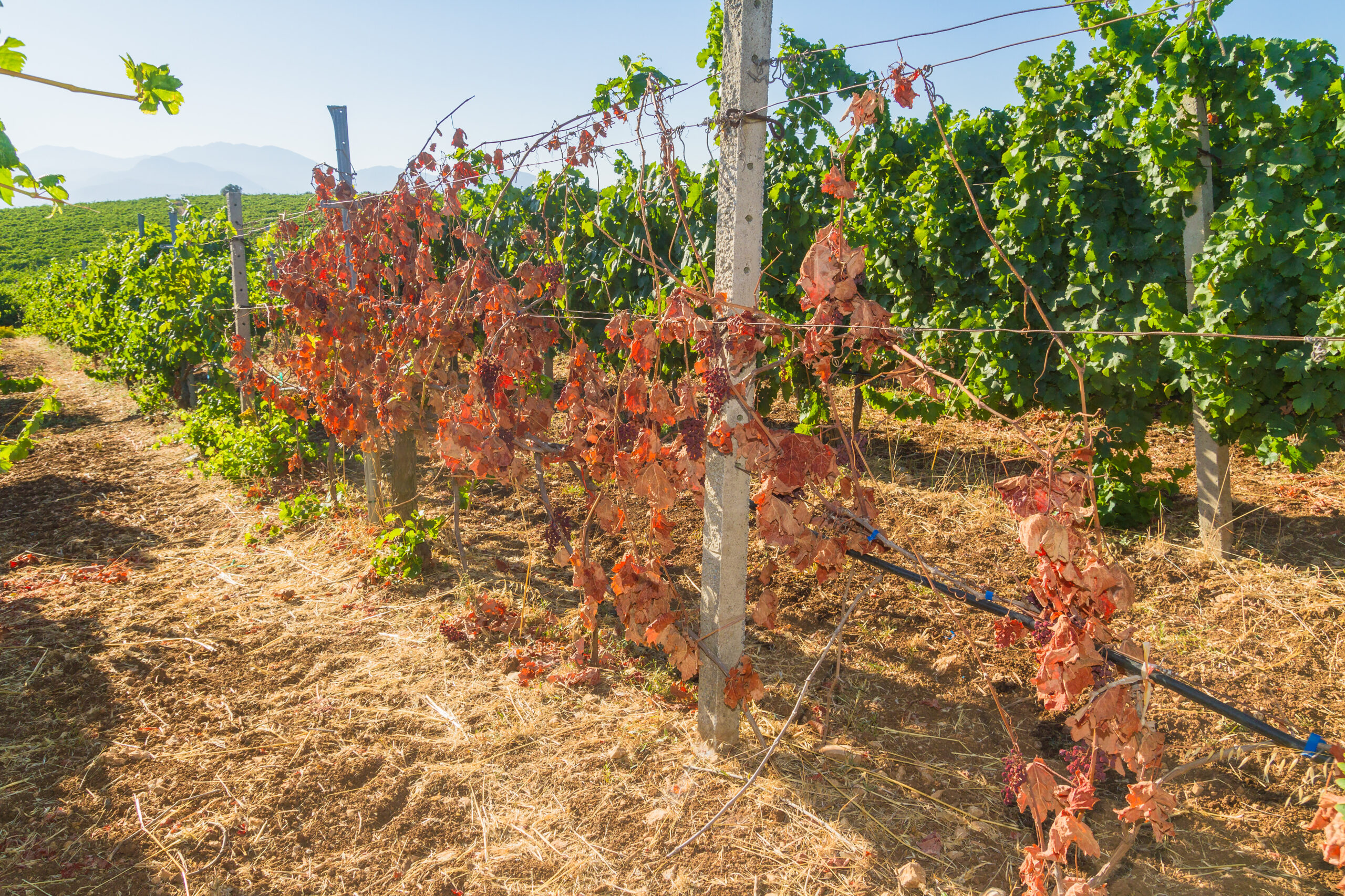
Crop pests and diseases pose a growing threat to food security, agricultural productivity and ecosystem resilience. While advances in Earth observation, field monitoring and digital surveillance are creating new opportunities for early detection, significant challenges remain in developing robust methods that can reliably identify plant stress across different crops, pathogens, environments and observation scales. Translating detailed field measurements and high-resolution observations into operational satellite-based monitoring systems requires harmonised datasets, validated indicators and a better understanding of how stress signals propagate from plant level to landscape scale.
This alliance brings together the HYDRA-EO, CERBERUS and STELLA projects to address this challenge through an integrated approach combining Earth observation, plant-health expertise and digital surveillance technologies.
HYDRA-EO contributes with expertise in hyperspectral, thermal, physiological and satellite-based crop stress monitoring, including physically based modelling, machine learning workflows, sensor harmonization, field protocols and EO processing chains. These methods are being transferred and tested in additional CERBERUS and STELLA pilot sites and adapted to future CHIME capabilities through spectral and spatial resolution simulations. CERBERUS contributes to experimental sites, disease expertise, smart-trap systems and digital surveillance tools, while STELLA contributes to proximal and remote sensing approaches, pest surveillance expertise and plant-health protocols.

Together, the projects are developing a shared framework where smart-trap observations, field measurements, airborne data, satellite acquisitions, physically based modelling and spread-modelling approaches are combined to improve multi-scale crop pest and disease detection. This supports improved risk mapping, and transferability of monitoring methods across sites, crops, pathogens, and regions. Expected alliance outcomes include the development of harmonised protocols for physiological measurements, pest observations and Earth observation data integration, providing a common foundation for future crop-health monitoring activities. Joint demonstration activities include an airborne campaign over vineyards affected by Flavescence dorée in the Bologna region and an olive-orchard case study supporting the detection of Xylella-related stress. The collaboration is also enabling coordinated satellite acquisition planning and the deployment of HYDRA-EO radiative-transfer and machine-learning processing workflows across multiple pilot sites. Together, these activities are helping to establish scalable and transferable approaches for operational crop pest and disease surveillance.