Why ocean health matters
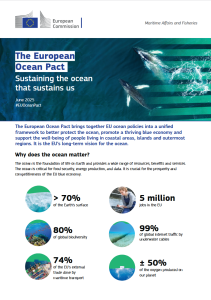
The ocean is a central component of the Earth System. It regulates climate, supports biodiversity and sustains human societies by generating around half of the oxygen we breathe, absorbing more than 90% of excess heat trapped by greenhouse gases, and taking up around a quarter to a third of human-caused CO2 emissions. In addition, marine ecosystems provide food, livelihoods, and protect coastlines from extreme events.
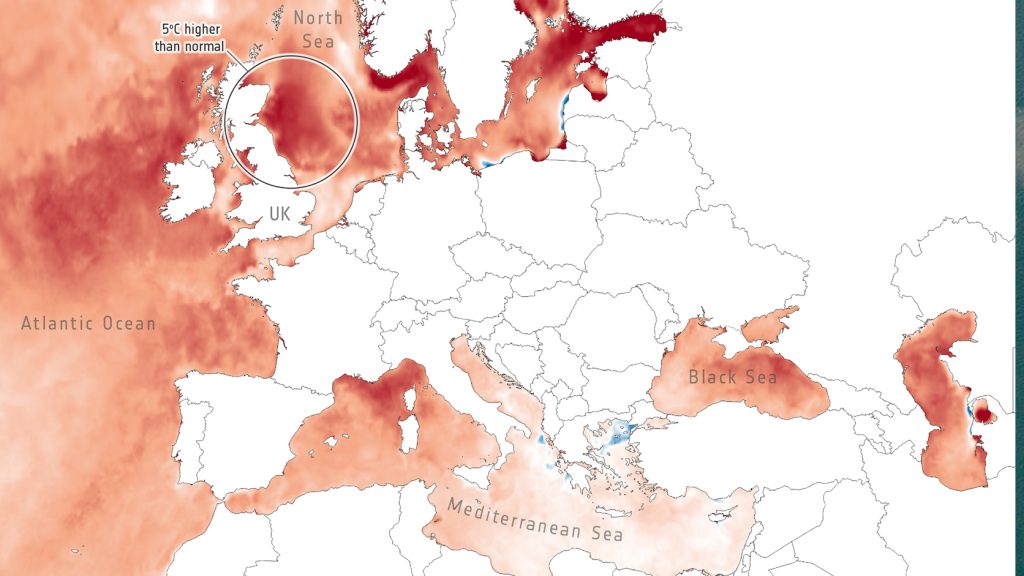
Ocean health is increasingly under pressure from a combination of human-driven and systemic changes. Rising ocean temperatures and acidification are altering marine ecosystems and disrupting biological processes, while sea level rise poses growing risks to coastal communities. Pollution further degrades marine environments, compounding the impacts of climate change. The impact of multiple stressors on the ocean is projected to increase as the human population grows towards the expected 9 billion by 2050.
Understanding and safeguarding ocean health is therefore essential not only for environmental stability, but also for climate resilience, biodiversity protection and the long-term wellbeing of society. Advancing our ability to observe, understand and predict the ocean supports the European Ocean Pact, the EU Ocean and Water Research and Innovation Strategy, and the Global Ocean Observing System.

Key challenges
OceanEye gives operational form to part of the Ocean Pact’s ambition, strengthening European ocean observation and positioning the EU as a global leader in ocean intelligence by 2035. Supporting OceanEye’s ambition, three priorities for EC-ESA cooperation are emerging:
- Developing the next-generation satellite observations to advance observations of ocean dynamics, marine biodiversity, biogeochemistry and ecosystems.
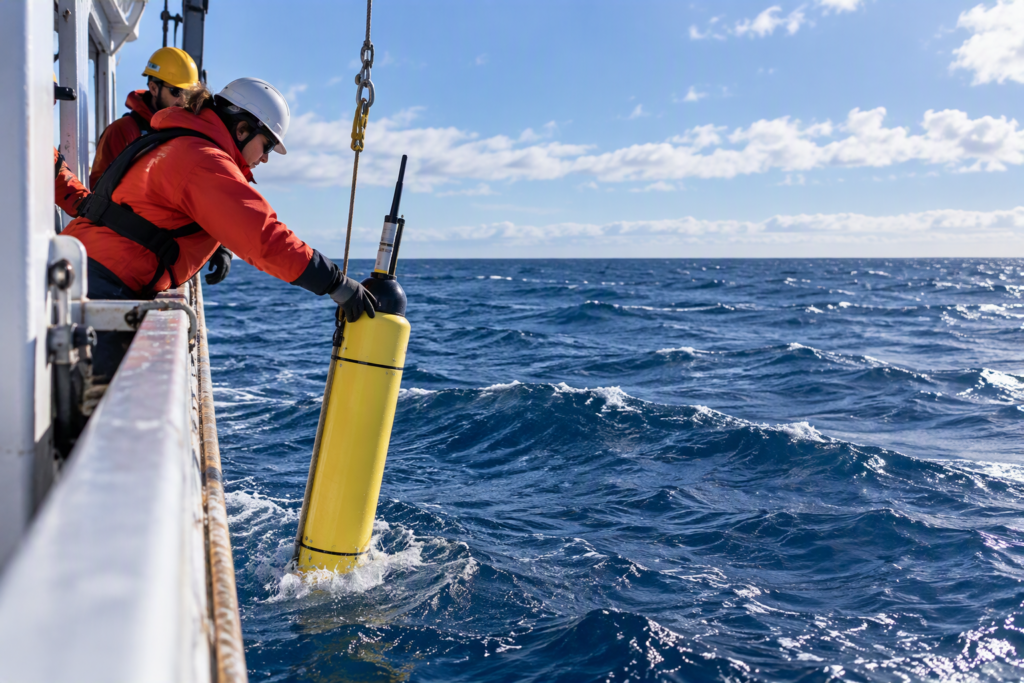
- Advancing the integration of satellite, in-situ and autonomous observations to close critical knowledge gaps.
- Combine observations with models and AI to improve understanding, forecasting and projections of ocean change and its interactions with the wider Earth system, e.g. AMOC.
Advance digital ocean intelligence, transforming observations and models into accessible knowledge and digital representations, contributing to OceanEye and the European Digital Twin Ocean.
ESA-EC contribution
The EC–ESA Flagship combines satellite Earth observation, in-situ measurements, modelling and AI to strengthen monitoring and understanding of ocean processes from European to global scale. Building on EU research and the ESA Ocean Science Cluster, cooperation advances next-generation observations, integrates satellite and in-situ data, and supports OceanEye and the European Digital Twin Ocean. This enables consistent monitoring of ocean conditions, supports climate adaptation strategies, informs marine and coastal policies, and contributes to international commitments such as the UN Decade of Ocean Science for Sustainable Development.
The BIOcean5D–HYPERBOOST alliance during the TREC campaign created a unique pan-European coastal dataset for satellite validation and future missions such as CHIME, enabling a new science assessing dynamic coastal processes. New activities such as Space for AMOC aim to exploit satellite observations of sea-surface height, temperature, salinity, currents and ocean mass together with in-situ arrays, models and machine learning to better characterise AMOC variability, while strengthening links with the Polar Regions and Global Impacts Flagship.