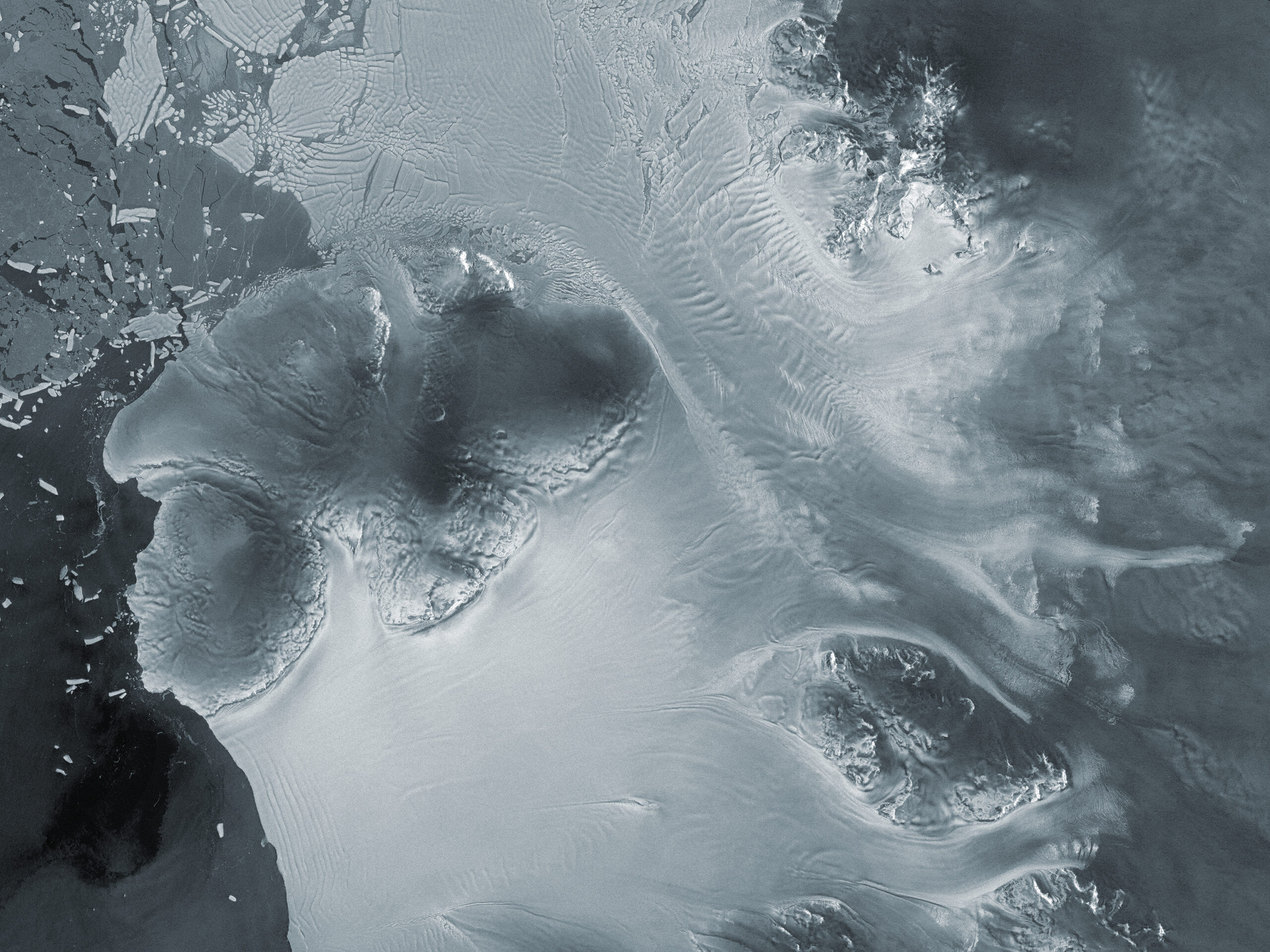
Antarctica is losing ice through a combination of ocean heat-driven melting, ice-shelf weakening, glacier acceleration and increased ice discharge into the ocean. Ice shelves act as buffers between the Antarctic Ice Sheet and the ocean. When these floating extensions of the ice sheet weaken or collapse, they can reduce the resistance that slows the flow of grounded ice towards the sea, accelerating ice loss and contributing to global sea-level rise. Ocean circulation controls the delivery of heat towards ice shelves and can drive basal melting, while meltwater released from the ice sheet can in turn modify ocean circulation and climate. An incomplete representation of these coupled processes make them a major source of uncertainty in projections of future sea-level rise.
This Alliance brings together the European Commission projects OCEAN:ICE and SO-CHIC and the ESA projects SO-ICE and Polar+ Ice Shelves to connect process-based research with measurement of ice parameters through Earth Observation. OCEAN:ICE and SO-CHIC try to advance understanding of ice-sheet–ocean interactions, Southern Ocean circulation, heat transport, freshwater fluxes and their impacts on climate. The ESA projects complement this research through sustained satellite observations of ice-shelf thickness, ice velocity, grounding-line migration, calving-front evolution and ice discharge. Together, they create an integrated framework that links what is changing in Antarctica, where it is changing, and why.
A recent alliance outcome demonstrated the value of this approach through observations of Cadman Glacier on the western Antarctic Peninsula. Satellite measurements revealed a rapid transition from a relatively stable glacier configuration to a state of dynamic imbalance driven by ocean warming. Between 2018 and 2019, ice speed increased by 94%, ice discharge increased by 0.52 ± 0.21 Gt per year, and the glacier’s calving front subsequently retreated by 8 km. The ice shelf completely collapsed in March 2021. These changes coincided with anomalously warm ocean conditions, with a 400 m-deep channel allowing warm water to reach the glacier, while neighbouring glaciers remained protected by bathymetric sills. Importantly, no surface meltwater ponds were observed, demonstrating that ocean-driven thinning and loss of ice-shelf buttressing alone can trigger rapid glacier acceleration and ice-shelf collapse.
The unique combination of ocean science, modelling and earth observation brought together by the alliance, helped Scientists understand that ocean-driven thinning and loss of ice-shelf buttressing alone can trigger rapid glacier acceleration and ice-shelf collapse. This knowledge will help improve our understanding and attribution of future sea-level rise.