Understanding atmospheric composition
The composition of our atmosphere is changing through human activities and natural processes. Long- and short-lived greenhouse gases, aerosols, and clouds interact and influence Earth’s climate, ecosystems and human health. Understanding what is changing, why and with what consequences is essential to anticipate climate change and assess its causes and impacts.
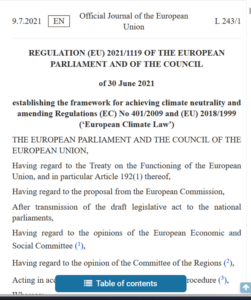
Closing knowledge gaps, highlighted in The next frontier for climate change science, strengthens the scientific basis for the Paris Agreement and its Global Stocktake, the European Climate Law, the EU Methane Regulation, the revised Ambient Air Quality Directive, the National Emission Reduction Commitments Directive and the Zero Pollution Action Plan.

Key challenges

Advancing our understanding of changes in atmospheric composition, fluxes and their effects on climate and society requires progress across several interconnected areas of atmospheric and Earth-system science:
- Reducing uncertainty from aerosols, clouds and their effects on climate, precipitation and regional response
- Quantifying greenhouse-gas sources and sinks, explaining methane growth and its biogenic and abiogenic origins, and improving understanding of N2O, F-Gases and other GHGs.
- Linking air pollution to exposure and health. Integrating satellite EO, in-situ observations and models improves source attribution, forecasting and exposure assessment, supporting action to reduce impacts on human health, ecosystems and biodiversity through a One Health approach.
- Better understanding atmospheric circulation in the upper and middle atmosphere and integrating observations from global to local scales.
ESA-EC contribution
The EC–ESA Atmospheric Composition Flagship connects the full scientific chain from observation and retrievals to process understanding, modelling and assessments. ESA projects contribute EO science and capabilities including imaging spectroscopy from Sentinel-5P/TROPOMI, Sentinel-5 on MetOP-SG and Sentinel-4 on MTG-S, the lidar, cloud radar, multispectral imaging and radiometry of EarthCARE, and forthcoming greenhouse-gas observations from CO2M, complemented by ground and airborne observations. EC supported research brings atmospheric chemistry, in-situ networks, emissions research, health research and Earth-system and transport modelling. Coordinating these capabilities enables projects to validate observations, test models across scales, improve emission estimates and reduce key uncertainties underpinning climate, air-quality and health policy.