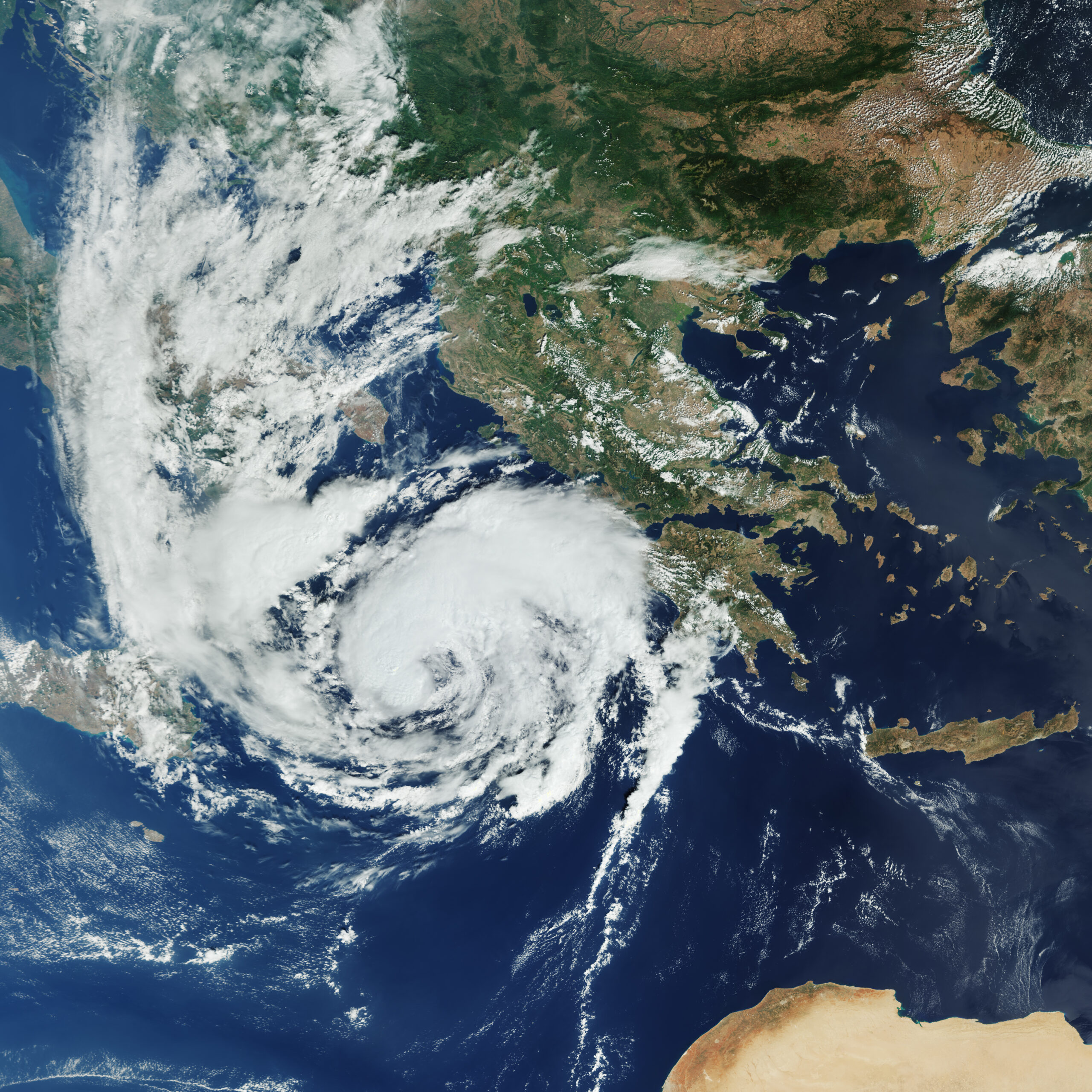
This Alliance explores how satellite Earth observation, atmospheric modelling and impact-based forecasting can improve the understanding, prediction and management of Mediterranean climate extremes. Together, ESA’s MEDICANES and Horizon Europe’s ARTEMis could connect research on tropical-like Mediterranean cyclones with operational approaches to multi-hazard early warning and emergency management.
MEDICANES develops satellite-based methods for storm detection, monitoring and intensity estimation, alongside high-resolution modelling, hazard assessment and digital twin approaches. ARTEMis develops harmonised impact-based forecasting methods, early warning tools and emergency management protocols, including flood-related pilot applications. Potential cooperation could focus on translating satellite-derived storm information into impact assessments and decision-support tools for civil protection authorities.
This coordinated approach aims to maximise public investment, avoid duplication, and deliver science greater than the sum of its parts. Collaboration may lead to:
- For MEDICANES, access to ARTEMis methodologies and operational use cases to assess the relevance of satellite-derived storm information for impact forecasting, early warning and emergency management.
- For ARTEMis, access to advanced satellite-based storm detection, monitoring and modelling methods to strengthen hazard characterisation and explore applications to Mediterranean extreme weather events.
- For the wider community, improved understanding of Mediterranean extreme events and more integrated approaches to forecasting, risk assessment and disaster preparedness.
Project teams are invited for a first meeting to discuss and refine modalities of cooperation as well as to propose joint deliverables (such as joint publications, data management plants, datasets, policy briefs). Consecutive meetings during Horizon Europe Annual Meetings, workshops and conferences are encouraged.
Collaborative outputs will be jointly defined between projects and may include, but are not limited to:
- Aligning monitoring campaigns, datasets, scenarios and model assumptions;
- Facilitating access to and uptake of satellite products and related methodologies through data sharing agreements and open science practices;
- Defining joint monitoring protocols, working towards defining community standards or aligning geographic scope;
- Coordinating data-management and open science approaches;
- Developing shared outputs such as jointly defined datasets, open tools, joint publications, community standards, assessment contributions and policy briefs;
- Joint communication activities;
- Training and capacity building activities, exchange of staff and/or young researchers.
Collaboration is expected to evolve with the scientific needs of the participating projects. Further exchanges during Horizon Europe Annual Meetings, relevant scientific workshops and conferences will be encouraged, to provide opportunities to identify additional cooperation based on the evolving needs and added value for participating projects.