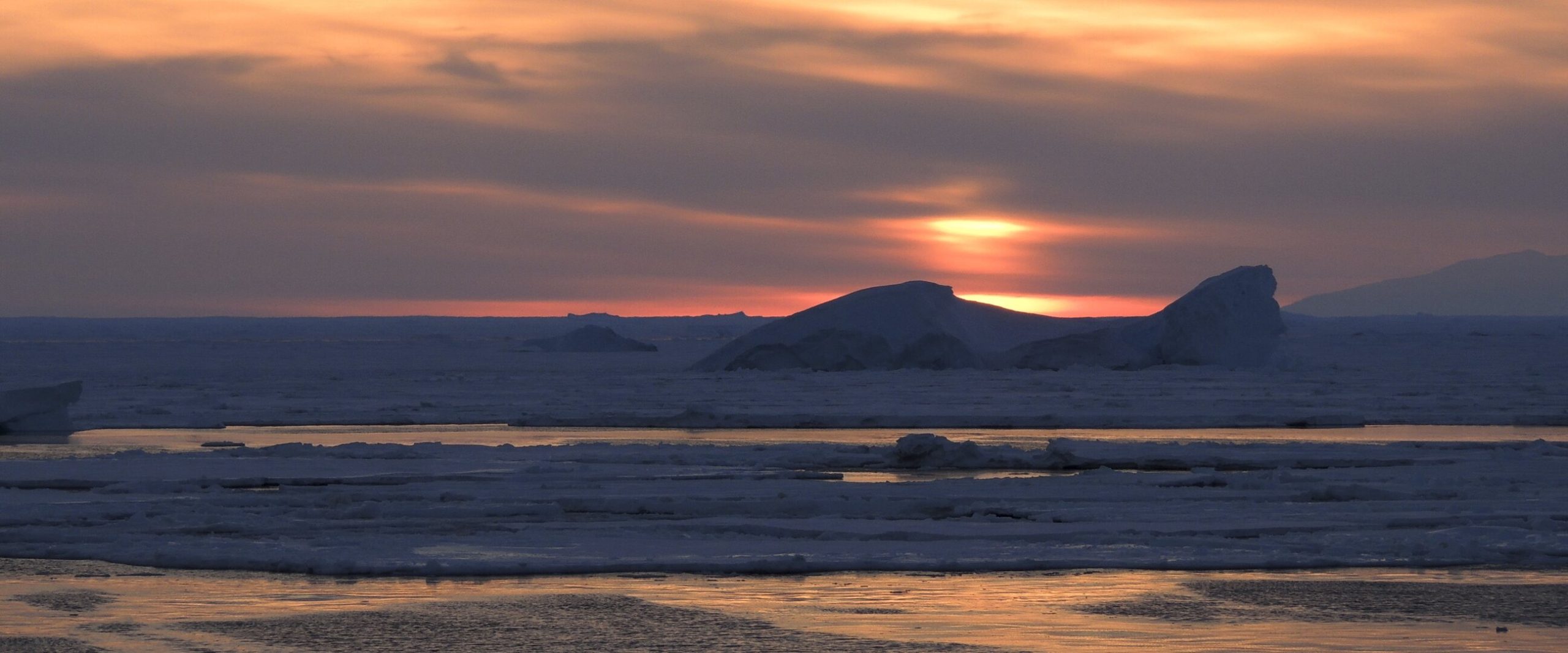
An unexpected rise in Antarctic ocean salinity is revealing new risks for sea ice, climate and the global ocean system.
Using data from ESA’s Soil Moisture and Ocean Salinity (SMOS) satellite, researchers have uncovered an unexpected shift in the Southern Ocean: surface waters around Antarctica are becoming saltier, despite a rapid decline in sea ice. This finding challenges long-held assumptions, as melting ice would normally freshen surface waters.
Since 2015, Antarctica has lost an area of sea ice comparable to the size of Greenland, marking one of the fastest environmental changes observed in recent decades. Scientists from the University of Southampton, analysing SMOS observations, detected a significant increase in surface salinity south of 50°S. The discovery suggests that the interactions between ocean circulation, sea ice and salinity are far more complex than previously understood.
“We expected melting ice to freshen the ocean, not make it saltier,” explained lead author Alessandro Silvano. “Instead, satellite observations show the opposite, indicating that important changes are taking place in the Southern Ocean.”
A feedback loop accelerating sea-ice loss
For decades, cold and relatively fresh surface waters acted as a lid over warmer, saltier deep waters. This layered structure helped keep heat trapped below the surface, supporting sea-ice formation and stability.
The new findings suggest that increasing surface salinity is weakening this natural barrier. As saltier surface waters become denser, heat from deeper ocean layers can rise more easily, melting sea ice from below and making it harder for new ice to form. Scientists believe this process may be creating a self-reinforcing feedback loop that accelerates sea-ice decline.
The trend coincides with the return of the Maud Rise polynya, an extensive area of open water in the Weddell Sea that had not appeared on a similar scale since the 1970s. Researchers warn that if these conditions persist, they could drive long-term changes in Southern Ocean circulation, with implications for climate and ecosystems worldwide.
Satellite data providing critical insights
Monitoring the Southern Ocean is particularly challenging because of its remoteness, harsh weather and long periods of winter darkness. To address these difficulties, researchers from the University of Southampton and the Barcelona Expert Centre developed advanced methods to retrieve salinity measurements in polar regions from satellite observations. The work was supported through ESA’s Science for Society initiative within the FutureEO programme.
By combining SMOS measurements with in-situ observations, the team assembled a 15-year record of ocean salinity, temperature and sea-ice conditions across the Southern Ocean. These data reveal that Antarctica is changing more rapidly and in different ways than many climate models had predicted.

Sea-surface salinity around Antarctica
The study is part of the ESA–EC Earth System Science Initiative (ESSI), showing the outcomes of the collaboration between the ESA-funded SO Fresh and EC-funded SO-CHIC projects. The collaboration enabled the integration of satellite observations, central to SO-FRESH, with in situ observations, which form the foundation of SO-CHIC, creating a more comprehensive approach to studying the Southern Ocean. Members of the SO-FRESH team actively participated in several SO-CHIC General Assemblies, further strengthening the collaboration and demonstrating the value of connecting ESA-funded and EU-funded research initiatives. By bringing together complementary expertise, data, and observational approaches, this partnership has enhanced the scientific impact of both projects and contributed to advancing European leadership in polar research. As an additional outcome, in the SO-FRESH workshop organized with SO-CHIC, the combination of satellite SSS with oxygen isotopes was suggested to disentangle freshwater sources in the corresponding Southern Ocean freshwater budget, and is now being addressed under the ESA CCI-Salinity project.